General cosmetic education, not medical advice. Follow product labels, avoid irritated or broken skin and stop using a product if it causes a reaction.
Prepare for the finish you want
Good preparation is not a contest to use the most skincare. Begin with a comfortable, familiar routine and let it settle before adding makeup. If the surface still feels very wet or slippery, immediate buffing can move the layers underneath. If skin feels dry or tight, repeated powder may make the finish less comfortable rather than more polished.
Use sunscreen according to its label and allow it to set as directed. Do not mix it with foundation to create a homemade tinted sunscreen; mixing can interfere with the protective film. If you need treatment advice for persistent irritation, acne, eczema or another skin concern, consult a qualified healthcare professional instead of trying to cover the problem with more cosmetics.
Map coverage instead of spreading it everywhere
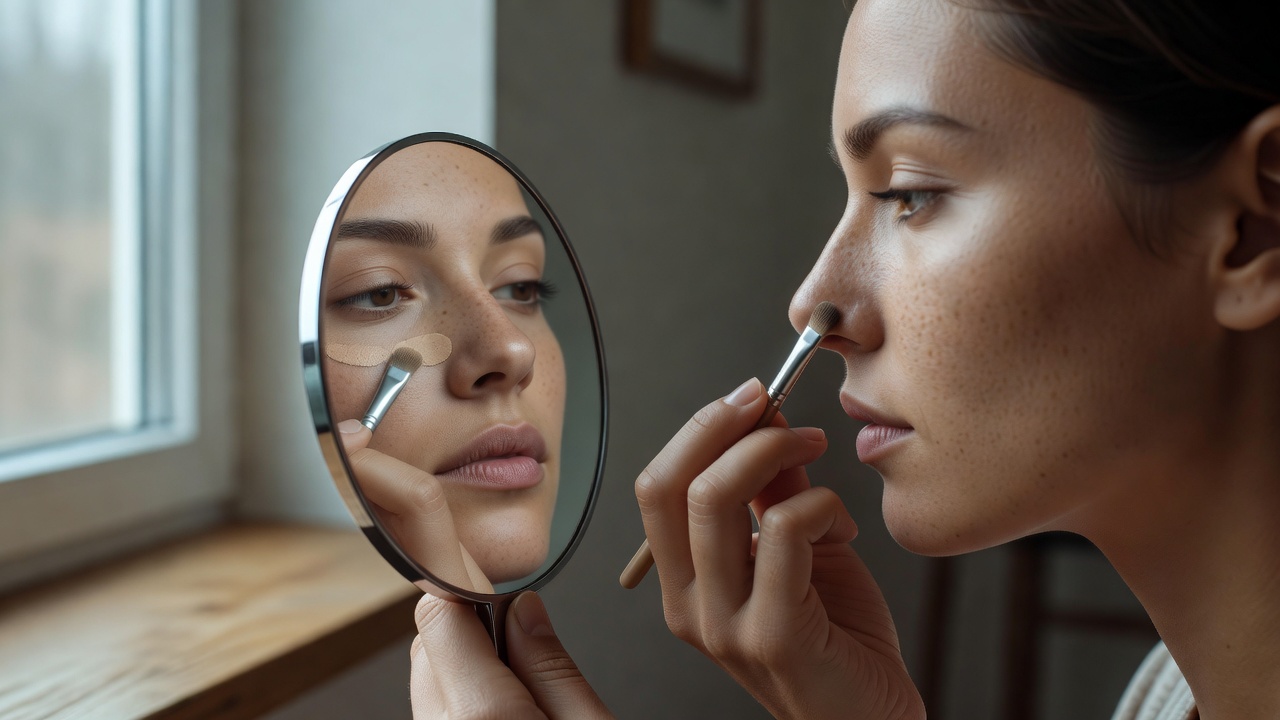
Look at your face in ordinary light and decide what you actually want to even out. You might prefer a little coverage around the nose, a softened mark or a more uniform area under the eyes. Apply small amounts there first. Leave other areas alone if you already like how they look.
Blend the boundary before adding more product to the centre. A small brush offers precise placement; a clean sponge can soften an edge; fingertips can work for products whose instructions permit that method. None is universally superior. The useful question is whether the tool gives the control and finish you want without dragging at the skin.
Give cream products a controlled working area
Pick up less than you think you need and work in small sections. Pressing or stippling can preserve underlying coverage better than repeated sweeping, particularly around the nose and cheeks. If a cream dries quickly, blend one side before placing it on the other. Do not keep rubbing a layer after it has started to set.
Blush placement should support your chosen shape, not a rule about correcting your face. Place a small amount, look straight ahead and soften the outer edge. If the colour becomes too strong, use the remaining trace of base on your tool to soften it rather than applying a fresh blanket of foundation.
Use powder as a local adjustment
A luminous cheek and a less shiny nose can exist in the same look. Press a little powder where makeup moves or where shine distracts you, then stop and reassess. A large brush loaded with product can deposit more than you need. Tap off excess and build gradually.
Powder does not remove skin texture, and repeated layers can become visible around movement lines. If an area has creased, gently smooth the displaced product with a clean tool before deciding whether it needs setting. Setting spray is also optional; it cannot guarantee that every formula combination becomes waterproof or transfer-proof.
When a layer goes wrong, diagnose the layer. Do not automatically add another one.
Troubleshoot without blaming one ingredient
If products pill: small rolled particles may come from excess product, rubbing, insufficient settling time or an incompatible combination. Simplify the routine and test one change at a time. A rule such as “all water-based products must stay together” is too crude to predict the behaviour of complete formulas.
If coverage separates: check whether the area was very oily, whether skincare remained slippery or whether too much product accumulated. Gently remove the affected patch and reapply a thin layer when possible. Repeatedly pressing more coverage over a broken surface often makes the boundary harder to disguise.
If the finish looks dry: reduce powder and friction before assuming you need a heavier foundation. Avoid scrubbing freshly made-up skin. For your next attempt, assess preparation and the product’s finish in a small area. Persistent flaking or discomfort is a skin concern, not an application challenge to force through.
Build the eye and lip with the same restraint
Use a small amount of shadow close to the intended shape, blend the edge and then add depth. Keep tools clean and use only products labelled for the eye area. Contact lens wearers and people with sensitive eyes may need particular care; stop if a product stings or makes your eyes water.
For lips, check for excessive balm before applying a product that needs a drier surface to adhere. Follow the formula’s directions rather than assuming all long-wear products behave alike. A soft lip edge is a style choice, not an unfinished version of a precise lip.
Clean up the routine, not just the edges
Wash reusable tools regularly with an appropriate cleanser and let them dry completely. Avoid sharing eye products or dipping used applicators into shared products. Follow expiry and period-after-opening guidance, and replace a product if its smell, texture or appearance changes unexpectedly. Do not add water to revive dried mascara.
At the end of the day, remove makeup gently with a suitable cleanser rather than repeatedly pulling at the skin. Keep a short record of combinations that worked. A dependable routine gives you more freedom to experiment with creator-inspired details and seasonal colour, because you are changing the creative part rather than rebuilding the foundation each time.